
Loading
Loading
In 1965, Kibbutz Hatzerim, a farming community in Israel’s dry Negev desert with little water and poor soil, signed an agreement with the water engineer Simcha Blass to build a business around his idea of drip irrigation.
In 1965, Kibbutz Hatzerim, a farming community in Israel’s dry Negev desert with little water and poor soil, signed an agreement with the water engineer Simcha Blass to build a business around his idea of drip irrigation. A year later, the kibbutz which is modelled as a co-operative opened a factory and produced the world’s first commercial dripper. That venture, Netafim, is now the world’s largest drip-irrigation company, with revenues of about $1 billion, and the kibbutz still owns a fifth of it.
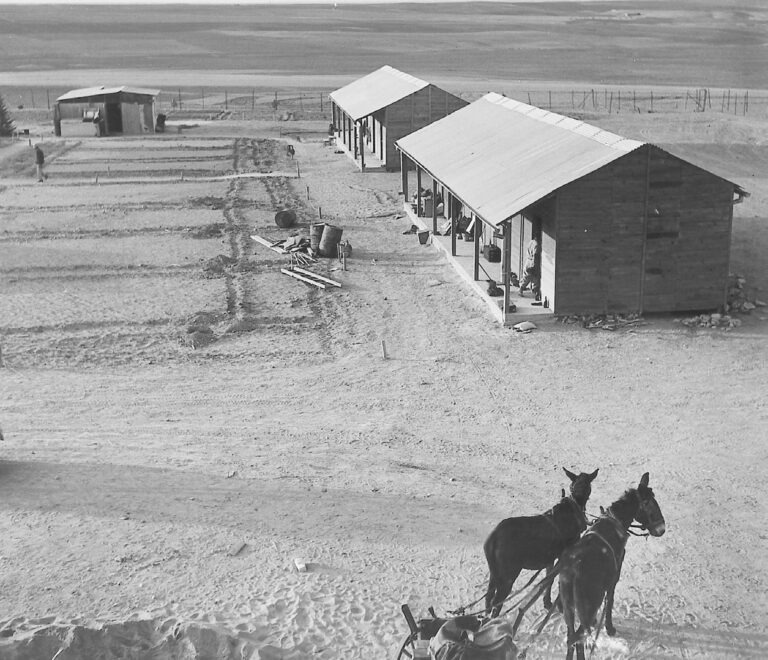
Kibbutz Hatzerim, 1947
India has had similar stories of places made affluent by people who trusted each other. Keeping that in mind, we need to analyse different kinds of village enterprises. The kibbutz, which stayed a community while becoming a serious business, is the enterprise model one can learn from.
Gandhi believed that economic life should be organised close to where people live. In his view, the village, and not the lone individual or a distant state, should be the basic unit of development, with wealth held in trust for the whole community. His dream of Gram Swaraj found a place in our Constitution through Article 40, which directs the State to set up village panchayats as units of self-government.
Swadeshi economists have long argued that Indian business, too, grew from community capital. Families and communities pooled money, shared risk and backed each other’s ventures. This is how the Gounders built Tiruppur’s knitwear industry, and how the Nadars built Sivakasi.
In the 1920s, Ayya Nadar and his cousin Shanmuga Nadar left drought-prone Sivakasi for Kolkata to learn how matches were made. On their return, they built the match and fireworks industries that today produce about 90 % of India’s crackers. Since matches and crackers needed paper for wrapping, labels and packaging, a printing industry grew up alongside them. Sivakasi now produces about 30 % of India’s diaries, as well as calendars, notebooks and other printed goods. One trade led to the next, and a dry town became an industrial centre.
What held these clusters together was social identity, family ties and the old village order, built on the jati and varna matrix. That order supported enterprise, but it also kept people in fixed places. B. R. Ambedkar called the Indian village “a sink of localism, a den of ignorance, narrow-mindedness and communalism.” He had good reason to.
Industrialisation loosened that order as the factory could employ more people than any institution in the past could, and shops, banks, schools and other services grew up around it, in what thus became cities. In 1987-88, two out of three Indian workers were in farming. By 2025, the figure was 43 %. People are leaving villages, marrying outside their circles and joining global institutions. While old hierarchies have weakened and individuals have gained freedom, which is mostly a good thing. But the old trust has faded, and nothing has been built to replace it.
A second change is now under way. In a post-industrial economy, AI will be able to take on almost any kind of work, physical or intellectual, and many jobs no longer need a factory floor or a city office. Villages could gain from this, but only if they offer what modern workers and businesses expect - reliable services, good connectivity, strong institutions and a community worth belonging to. India needs a village institution built on choice rather than birth. Israel began testing one more than a century ago.
A kibbutz is a village whose members pool their land, labour and income, and manage their shared life and businesses together. The first kibbutz was founded at Degania in 1910, and the model went on to become one of Israel’s most effective tools for building the nation. Its founders were mostly socialists, yet they arrived at much the same conclusion as Gandhi. This makes the kibbutz the closest real-world test of his ideas. Four lessons stand out.
The first lesson is that a community can create wealth, not just share it. In a traditional kibbutz, all income went into a common pool. Families were given money according to their size, and the rest was used for investment and to support members in need. This shared safety net allowed people to take risks that no single family could take alone. Today, kibbutz residents make up less than 2 % of Israel’s population. Yet in 2023, they produced about 40 % of the country’s farm output and about 10 % of its manufacturing. Neighbouring kibbutzim jointly ran cotton gins and poultry plants, and bought and sold goods together. They enjoyed the benefits of working at a large scale, while each village kept its own identity.
The second lesson is about governance. Every kibbutz is run by a general assembly of all its members, which makes policy and elects office-bearers. Elected committees look after housing, finance, health and culture, and the head of each business unit is changed every two to three years.
The third lesson is about planning. Each kibbutz was carefully laid out, with homes, gardens, playgrounds, cattle sheds, orchards, fish ponds, fields and factories. People walked or cycled, and older members moved around in electric carts. This kind of planning is what allowed Israel to settle and farm harsh land such as the Negev. The village was treated as national infrastructure, as important as a dam or a highway. Indian policy, by contrast, still tends to see the village as a place where schemes are delivered, not as a place to build.
The fourth lesson matters most for India today: the kibbutz survived because it was willing to change. By the 1980s, many kibbutzim were deep in debt, and young people were leaving. The movement responded with wide-ranging reforms. By the start of this century, 179 of Israel’s 270 kibbutzim had privatised in some form.
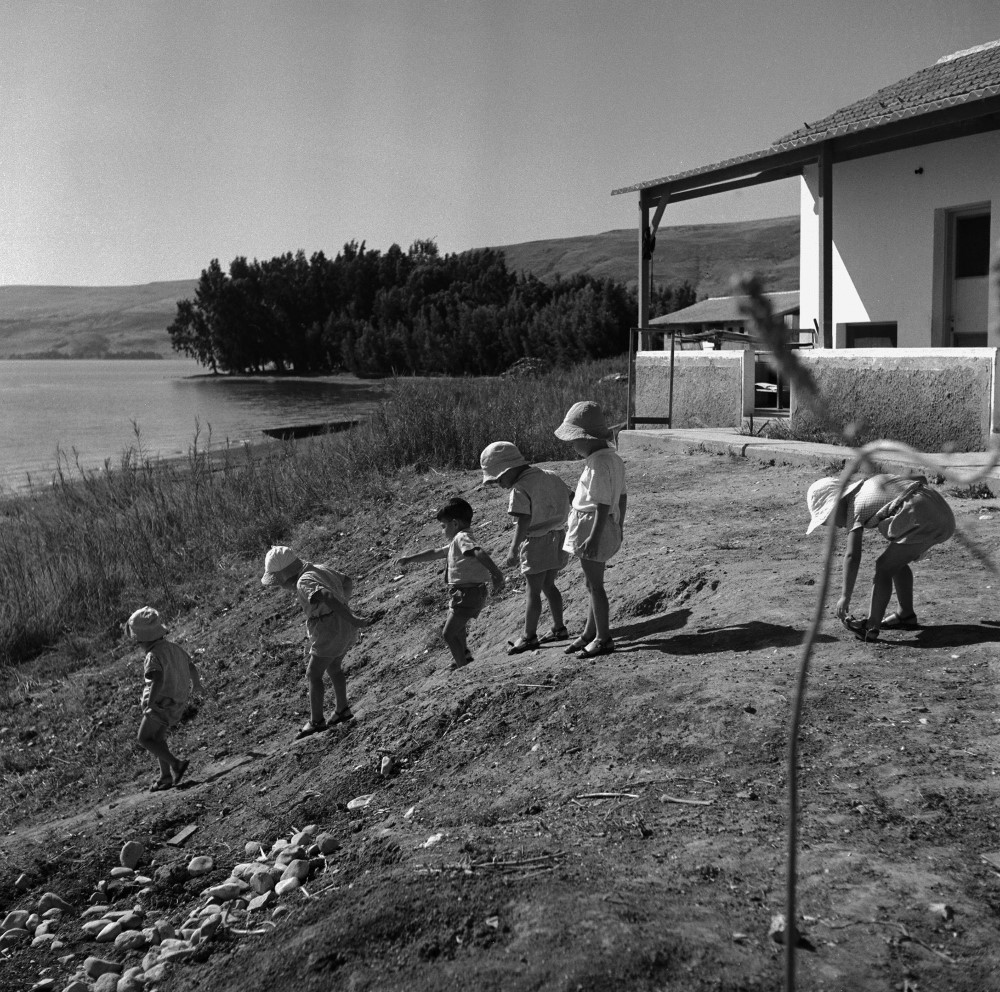
Children on a morning trip to the shores of the Sea of Galilee, Kibbutz Ginosar, 1950
Before the reforms, every member got the same budget, no matter what job they did. Homes and assets belonged to everyone. Members did all the work themselves, because hiring outsiders was looked down upon. Heads of each branch were elected from among the members, a single body ran both community life and the businesses, and meals, laundry and childcare were free.
After the reforms, salaries were linked to work and skill, and those who earned more were taxed to pay for a safety net. Members got rights to their own homes, while the kibbutz kept ownership of the land and the businesses. Hired workers made up less than a third of the industrial workforce in 1990, but two-thirds by 2000. Professional managers and boards took charge, and the community and its businesses became separate legal entities. Most services were now paid for by the people who used them. Income that once came from farming and small factories now also comes from tourism, property and technology.
This is why the kibbutz is a model for the age of AI and not a relic. It rewards individual effort, hires outside talent, uses professional managers and earns from modern industries. Yet it still owns its land and businesses in common, and still looks after its members. An institution survives when it can change its methods without losing its purpose.
India’s panchayats can take lessons from this. The country has over 2.5 lakh village panchayats, so the structure of local self-government is in place. Finance is another matter. According to the Reserve Bank of India’s 2024 report on panchayat finances, their own tax revenue was only about 1 % of their total revenue between 2020 and 2023. The average panchayat raised around ₹21,000 a year through its own taxes, compared to roughly ₹17 lakh in central grants. India has decentralised administration, while Israel decentralised enterprise. A kibbutz earns its own living, but a panchayat depends on funds handed down to it.
Two reforms based on the kibbutz experience could start to change this.
The first is to separate the community from the business. The panchayat and the gram sabha should remain the governing bodies, deciding on welfare, local public goods and how shared income is spent. Productive assets, such as cold storage, processing units, solar plants, tourism projects or leased common land, should be placed in a separate business entity. It would have a professional manager and audited accounts, with the gram sabha as its shareholder and profits going into a village fund. This does three things at once. It gives panchayats real income of their own. It keeps business decisions free from the pressure of local elections. And it stops a few powerful families from taking over village resources, so that the village does not become the sink of localism Ambedkar warned against.
The second is to welcome private capital. Private investors could hold minority stakes in village businesses, bringing in money, technology and access to markets that grants alone cannot provide. Village households could own individual shares, so that each family’s stake grows with the business instead of depending on the goodwill of the sarpanch. Services that panchayats find hard to run today, such as waste management, water supply and street lighting, could be handed to private operators on clear performance terms, with the gram sabha reviewing the results.
Hatzerim did not stop being a community when it built a global company. Sivakasi, too, turned a harsh landscape into a thriving industry because its people trusted each other. In India now taking shape, the trust will have to come from new age foresighted institutions.
Gandhi gave India the idea of the Gram Swarajya, and our business clusters showed what communities can achieve when their members trust each other. The kibbutz shows how to turn that trust into an institution that lasts. As the economy enters the age of AI, the Indian village cannot be treated as something left over from the past. It has to be rebuilt as a modern institution.